Undercarriage & Chassis Wash Systems
Drive-over neutralizers and manual push chassis washers — the equipment that stops road salt corrosion where it actually starts, on the frame rails and brake lines an exterior wash never reaches.
Road salt and brine do their damage underneath the vehicle, on the frame rails, brake lines, fuel tanks and wiring an exterior wash never touches. Enzo's builds two kinds of undercarriage wash system for that job: drive-over neutralizers, which wash and chemically neutralize a full chassis as the vehicle rolls across them, and manual push undercarriage sprayers, wheeled units an operator guides beneath the vehicle. Drive-over is the right answer for most fleets washing on a routine; push units suit smaller or mixed fleets and targeted work.
What this equipment gets called
There is no settled name for it, which makes it harder to shop for than it should be. Depending on the industry you will hear undercarriage wash system, chassis wash or chassis cleaning, underbody wash or underbody flush, undercarriage cleaner, and in the fire service an under-truck rinser. Transit and trucking tend toward "chassis"; fire departments say "underbody"; municipal garages usually say "undercarriage".
They all describe the same job — washing and neutralising the underside of a vehicle that an exterior wash cannot reach. The distinction that actually matters is not the name but the deployment: a fixed drive-over system built into the wash lane, or a portable unit an operator moves under the vehicle. Both are covered below.
Drive-Over Undercarriage Neutralizers
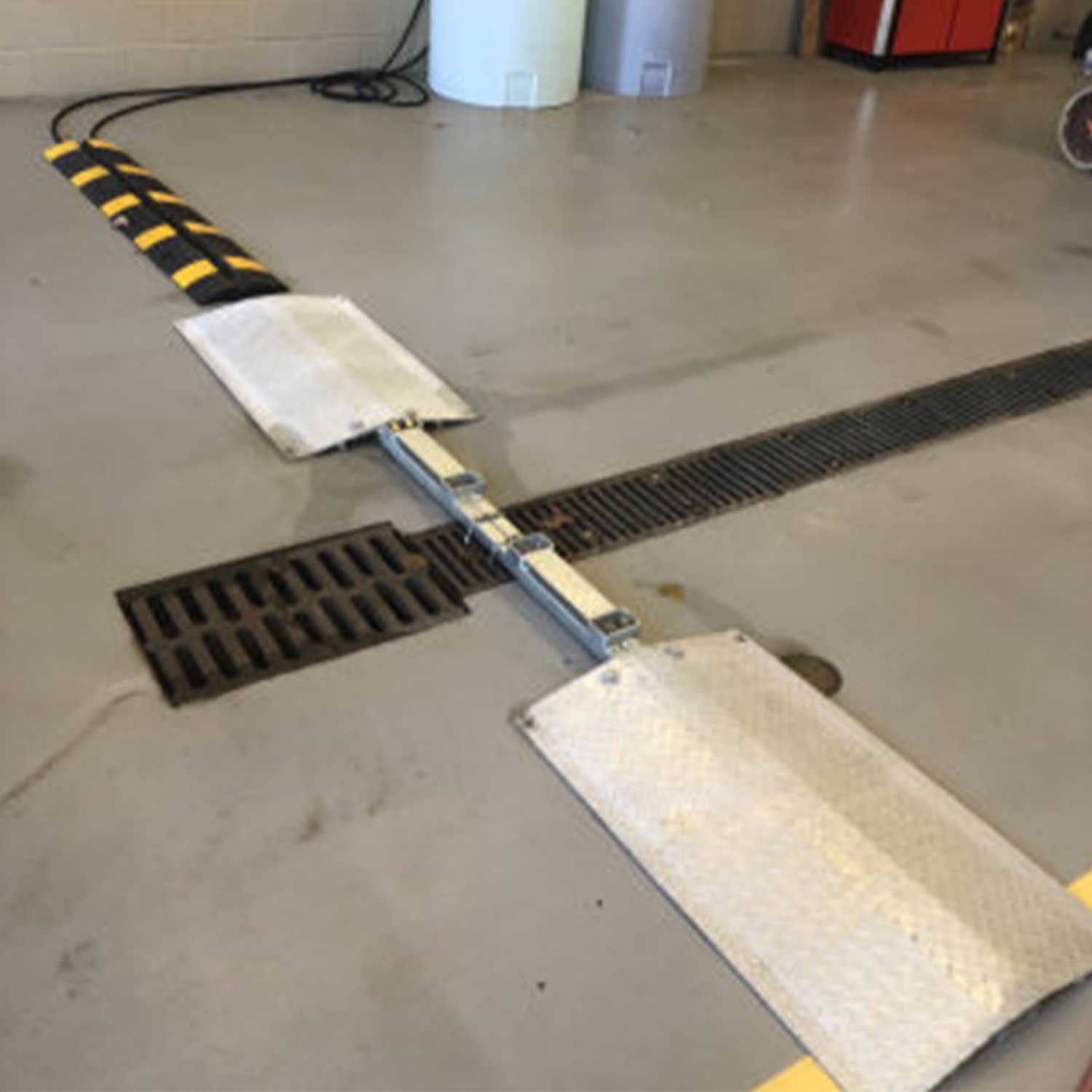
The driver pulls across the pads at walking speed and the entire underside is washed and neutralized in one pass — under five minutes, no dedicated wash crew, and nobody working beneath a vehicle. See the full drive-over undercarriage washer, Enzo's flagship system, built and serviced in-house.
Why fleets choose drive-over
- Stops the corrosive effect of road salt and brine, not just the visible dirt
- Full chassis coverage on every pass — repeatable, not operator-dependent
- Complete undercarriage wash in under five minutes per vehicle
- Keeps staff out from under the vehicle entirely
- Works with the pressure washer already in your bay
- Designed, built and serviced by Enzo's
Per vehicle wash
Chemical channels
PSI minimum
GPM flow rate
What's in a drive-over system
Dual Pad, Dual Spray Bar
One rinse bar and one chemical bar mounted in drive-over pads. The driver pulls across at walking speed and the full chassis is washed from below — no one crouches under the vehicle.
4-Channel Chemical Selector
A selector manifold feeds a downstream injector, so you switch between D-Salt neutralizer, Sizzle brushless truck wash, Buckshot 10 Gauge degreaser or a disinfectant on the fly — without disconnecting anything.
High Pressure Manifold
A single inlet splits to two outlets, one per spray bar, each on its own high-pressure ball valve so you can dial in flow for a pickup or a tandem-axle plow truck.
Uses Your Existing Washer
Runs off any pressure washer that delivers at least 4 GPM at 2,000 PSI. Most fleets already own the pump — the system plugs into what is on the wall today.
Built for fleets that run through salt
Municipal & DPW Fleets
Plow trucks, salt spreaders and dump trucks that carry the heaviest chloride load of any vehicle on the road.
School Bus Fleets
Whole fleets washed between routes — buses pull through in the gap without extra staff or a wash crew.
Fire & Emergency
Engines, tankers and rescue units kept corrosion-free and inspection-ready between calls.
Trucking & Private Fleets
Tractors, trailers, service vans — anything running salted highways all winter on a daily cycle.
Manual Push Undercarriage Sprayers
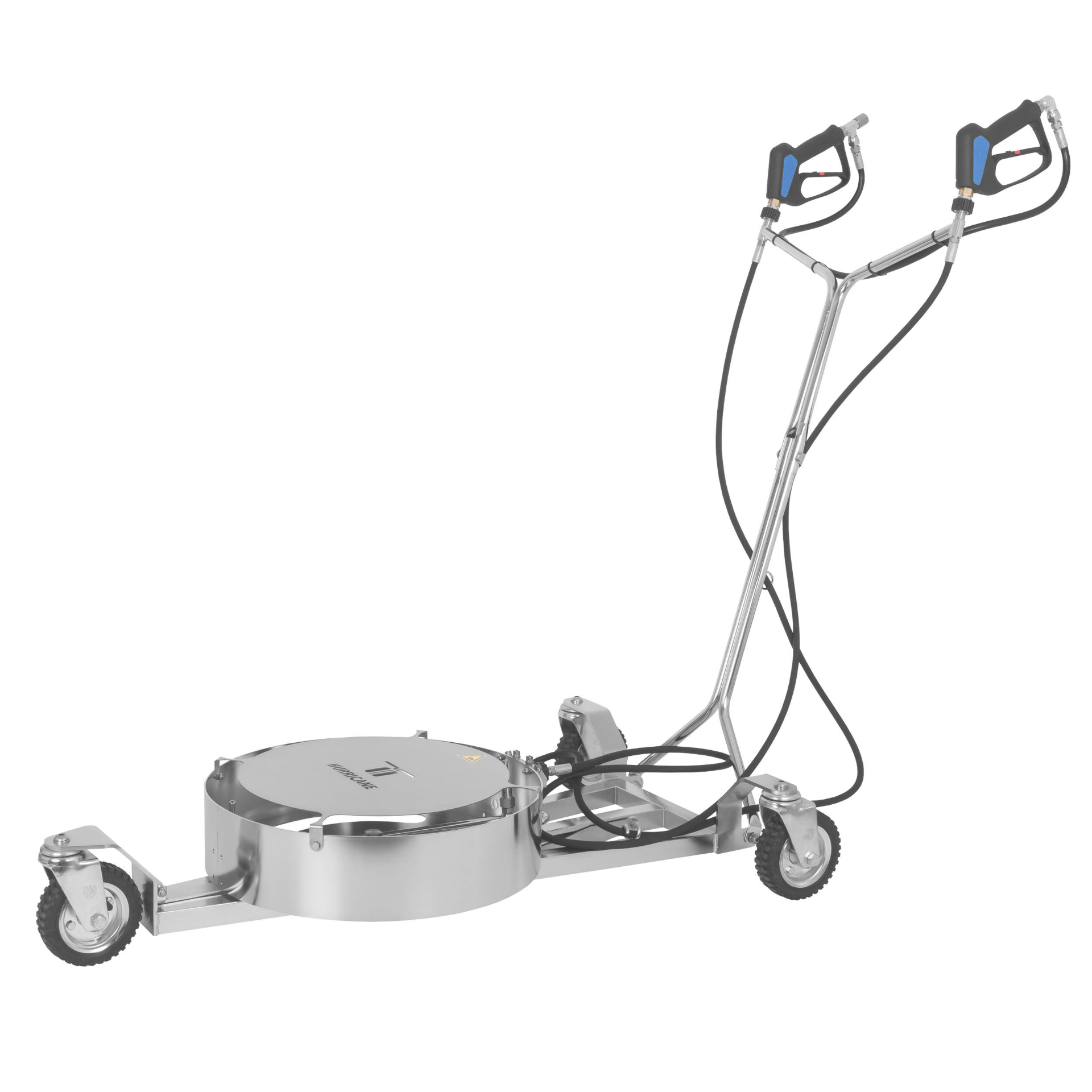
Enzo's Push Under Carriage Deluxe units are wheeled, stainless steel rotary sprayers the operator walks beneath the vehicle. They take longer per vehicle than a drive-over system, but they cost less, install nowhere, and let the operator aim spray exactly where the corrosion is.
Push Under Carriage Deluxe 1
Dual trigger guns — two operators, or one working both sides of the frame.
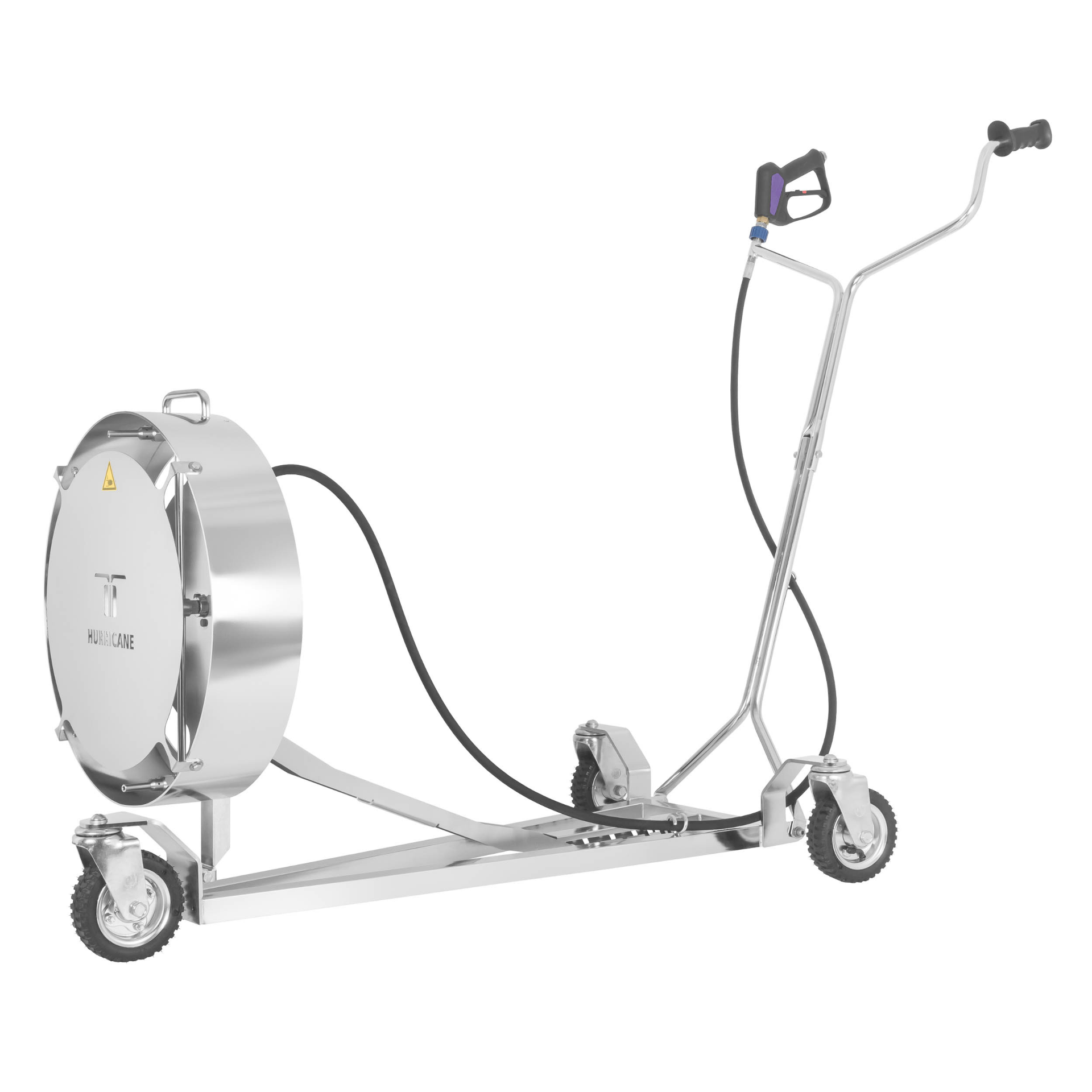
Push Under Carriage Deluxe 2
Single-operator layout for tighter bays and one-person crews.
Features
- Stainless steel rotary spray head built to resist the salt it is washing off
- Pneumatic wheels roll over bay floors, gravel and uneven yard surfaces
- Operator-directed spray reaches wheel wells, spring pockets and frame rails a fixed bar cannot aim into
- Connects to the same pressure washer that runs the rest of the bay
- Rolls out of the way when the bay is needed for something else
- No pit, no trench, no concrete work, no permanent install
Where they fit
Small or mixed fleets
When you run a handful of vehicles, or vehicle sizes vary too much for a fixed pad, a push unit gives full undercarriage coverage without a capital project.
Spot and detail work
Targeted cleaning of a specific corroded area, a pre-inspection wash, or a unit coming back from a job site caked in mud and de-icer.
Construction & agriculture
Heavy equipment, implements and low-clearance machines that will never fit a drive-over lane still need the salt, soil and fertilizer flushed off.
Leased or shared facilities
Nothing is anchored to the floor, so the equipment moves with you and needs no landlord approval to install.
Drive-Over Or Manual Push?
Both stop salt corrosion. The difference is throughput, consistency and how much of the work falls on an operator.
| Drive-Over Neutralizer | Manual Push Sprayer | |
|---|---|---|
| How it is used | Driver pulls across the pads; no operator underneath | Operator walks the unit under the vehicle |
| Time per vehicle | Under 5 minutes, unattended | Longer — depends on the operator and the vehicle |
| Best fleet size | Medium to large, washed on a routine | Small fleets, mixed sizes, or occasional washing |
| Coverage | Consistent full-chassis pass, repeatable every time | Operator-directed — can target specific problem areas |
| Chemical application | 4-channel selector, D-Salt applied automatically | Applied through the same downstream injector setup |
| Installation | Positioned in the wash lane or bay | None — roll it in and connect |
Not sure which fits your operation? A free on-site assessment sizes the system to your vehicles, your bay and your budget.
Why Undercarriage Cleaning Matters
Across Ohio and the Midwest, road crews apply thousands of tons of rock salt and liquid brine every winter. That de-icer keeps roads safe, but it clings to the undercarriage of every truck, trailer and piece of equipment that drives over it — and it never stops working. Left in place, chloride from road salt accelerates rust on frames, brake lines, fuel tanks, wiring harnesses and hydraulic components, quietly shortening the life of vehicles that cost tens of thousands of dollars to replace.
Undercarriage wash systems attack the problem where a normal wash can't reach. A drive-over or push-under sprayer directs high-volume, angled spray straight up into the chassis, flushing packed salt, sand and grime out of the frame rails and suspension before corrosion can take hold. For fleets that run daily through winter conditions, a two-minute undercarriage rinse is one of the cheapest forms of preventive maintenance available.
Rinsing alone, though, only removes what you can see. Chloride left in seams and crevices keeps reacting with bare metal long after the vehicle is dry, which is why Enzo's drive-over systems apply D-Salt neutralizing chemistry from a dedicated bar rather than relying on water pressure. Undercarriage systems are also a core component of a complete wash bay design, and a key part of any plan to protect your fleet from corrosion and downtime.
Fleet & Transportation
Trucks, trailers, buses and municipal vehicles that see daily winter road salt.
Construction & Ag
Heavy equipment exposed to corrosive soils, fertilizers and de-icing chemicals.
Wash Bay Integration
Add undercarriage spray to a new or existing wash bay for complete, single-pass cleaning.
Undercarriage Wash System FAQs
What is an undercarriage wash system?
An undercarriage wash system sprays high-volume water and cleaning chemistry upward into the underside of a vehicle — the frame rails, axles, brake lines, fuel tank and wiring that a normal exterior wash never reaches. It is the part of the vehicle where road salt collects and where corrosion actually starts.
How does a drive-over wash system work?
A drive-over wash system uses spray bars mounted in pads laid in the wash lane. The driver pulls across at walking speed and angled nozzles flush the entire chassis from below. Enzo's drive-over unit uses two bars — one rinse, one chemical — so salt is both washed off and chemically neutralized in a single pass, in under five minutes per vehicle.
What is the difference between a drive-over neutralizer and a manual push sprayer?
A drive-over neutralizer is fixed in the wash lane and cleans the whole undercarriage automatically as the vehicle rolls across it, which makes it the right choice for washing a fleet on a routine. A manual push undercarriage sprayer is a wheeled unit an operator walks beneath the vehicle, which is slower but costs less, needs no installation and lets the operator aim at specific problem areas.
Does an undercarriage wash system need its own pressure washer?
No. Enzo's undercarriage systems run off any pressure washer supplying at least 4 GPM at 2,000 PSI, so most fleets can connect to the machine already in the bay. If your current washer falls short, we will size one during the free assessment.
Is rinsing with water enough to stop salt corrosion?
Rinsing removes the visible salt but leaves chloride behind in seams and crevices, where it keeps corroding. Pairing the wash with D-Salt neutralizing chemistry stops the chloride reaction on contact, which is why the drive-over system applies chemical and rinse from separate bars.
How often should a fleet wash undercarriages in winter?
Through active salt season, most fleets get the best return washing after each run through treated roads, or at minimum weekly. The cost of a two-minute undercarriage rinse is a fraction of a single corroded brake or fuel line repair.
Put An Undercarriage Wash System In Your Bay
Tell us what you run and where you wash it. We'll recommend drive-over or push-under, size it to your pressure washer, and quote it.