Commercial & Industrial Pressure Washers
Hot water, cold water, electric, gas, diesel and natural gas — sized to the job and serviced by the people who sell them.
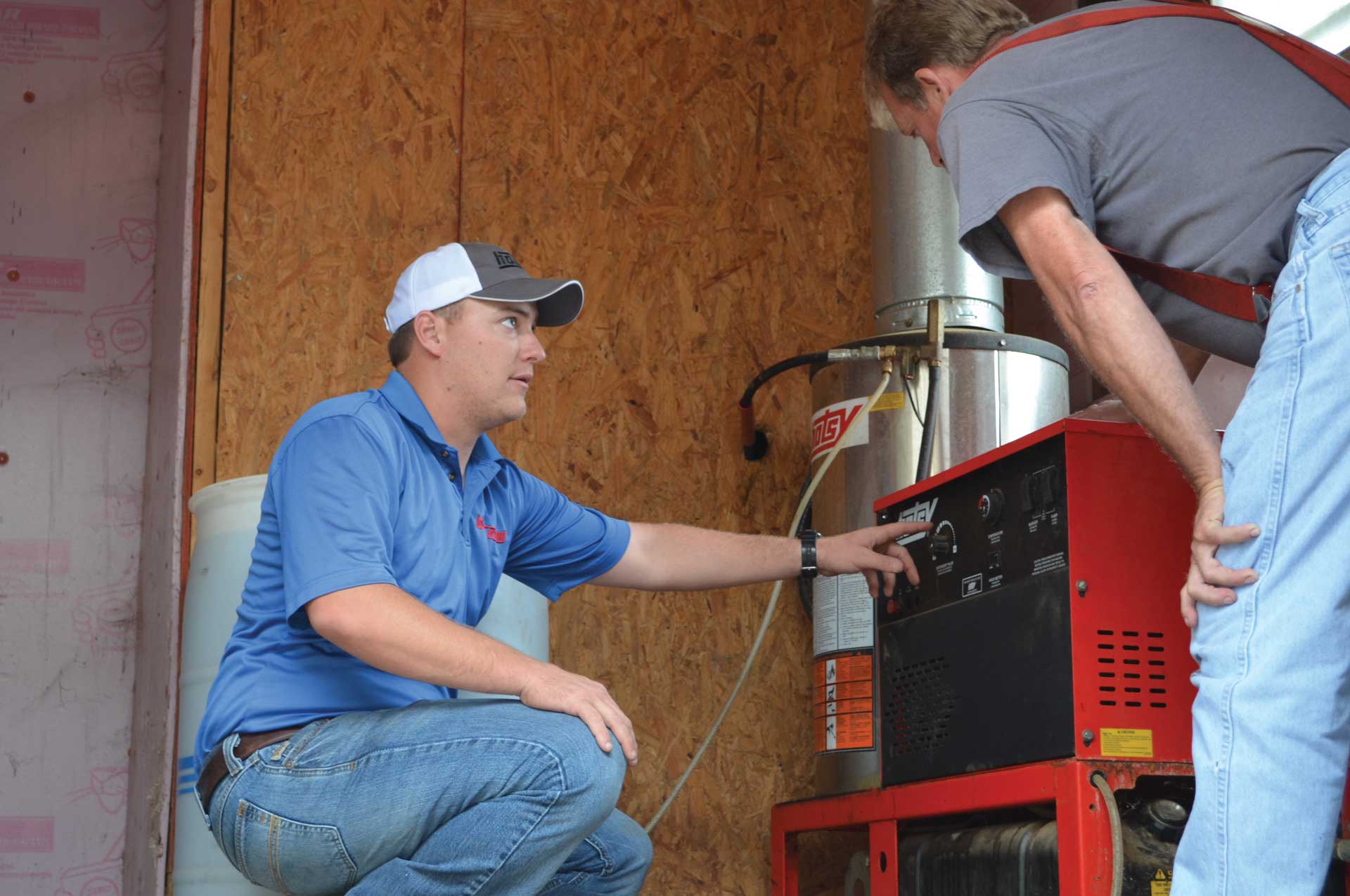
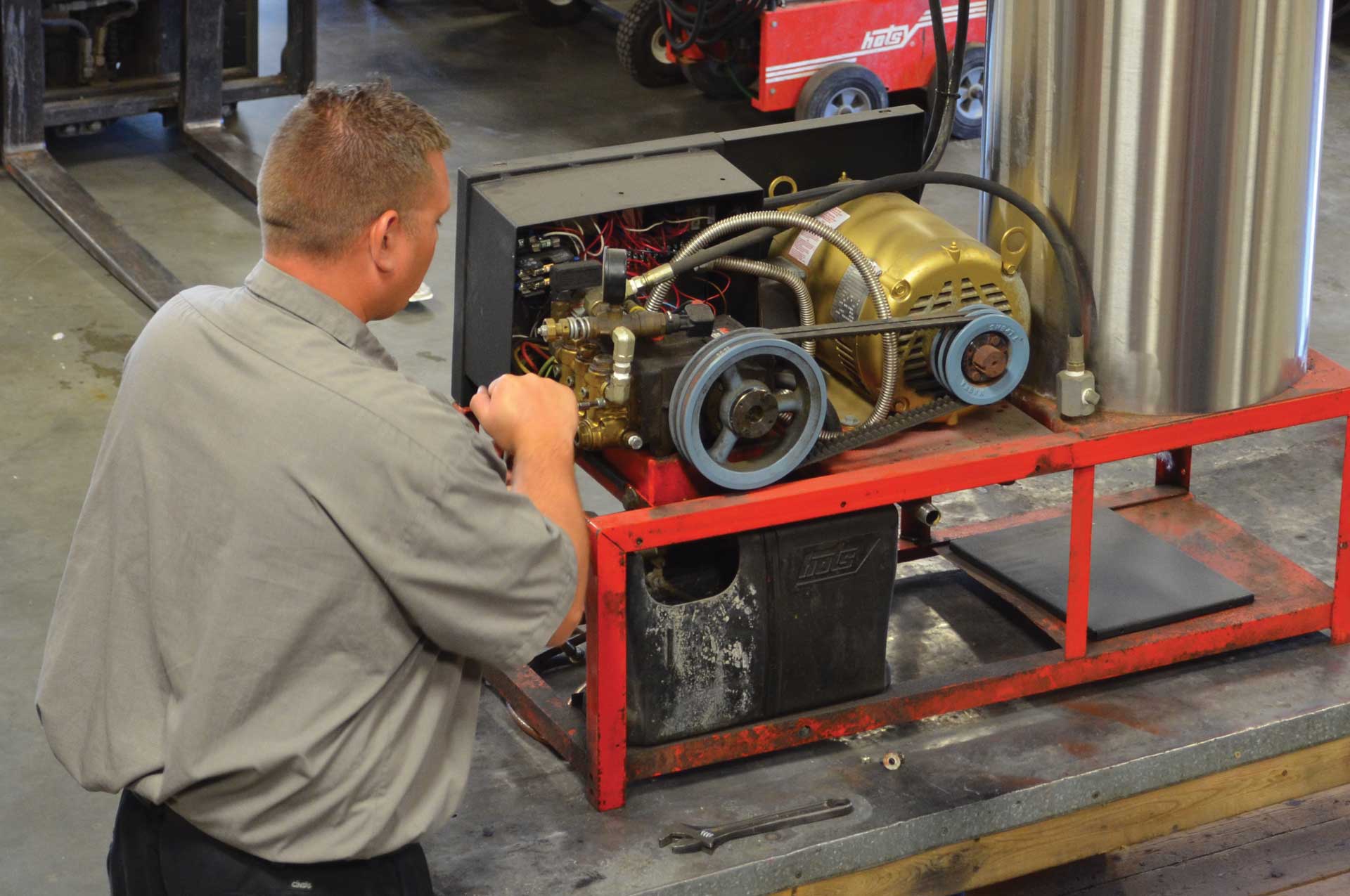
How To Choose A Pressure Washer
Four decisions cover almost every commercial purchase: hot or cold water, what drives the pump, what heats the water, and how the machine is sized. Get those right and the rest is accessories.
Hot water or cold water
This is the decision that matters most, and it comes down to what you are removing. Cold water moves dirt, mud and loose debris by force alone. Hot water dissolves what force cannot — grease, oil, fats and road film soften and release at temperature, so a hot unit cleans them faster and with less detergent. If your soil is greasy, a cold machine will frustrate you no matter how much pressure it has. If you are rinsing mud off equipment, hot water is cost you do not need.
What drives the pump
Electric motors are quiet and produce no exhaust, which is what makes them the only sensible choice indoors — in a wash bay, a food plant or a warehouse. They need adequate power at the wash point.
Gasoline and diesel engines go where power does not: job sites, remote yards, mobile wash trailers. They buy independence at the cost of exhaust, noise and fuel handling, so they belong outdoors.
What heats the water
On a hot water machine the burner is a separate decision from the motor. Oil-fired burners carry their own fuel, so the machine can be moved and used anywhere — at the cost of storing and hauling fuel oil or diesel. Gas-fired burners plumb into a building's natural gas supply, which usually means lower running cost and nothing to refill, but the machine stays where it is installed. That trade — mobility against operating cost — is the whole decision.
Sizing: why GPM matters more than people expect
Buyers fixate on PSI, but flow rate usually decides how long a job takes. Pressure breaks the bond between the soil and the surface; flow carries the soil away. A machine with more gallons per minute rinses a large surface faster than a higher-pressure machine with less flow, which is why fleet and wash bay work is generally flow-driven. The two multiply into cleaning units, and matching them to your actual work — surface area, soil type, how many vehicles per shift — is the part worth a conversation rather than a spec sheet.
Where to go from here
Browse Hotsy pressure washers or Mi-T-M pressure washers, add the nozzles, surface cleaners and hoses that determine what the machine actually delivers, or talk to us about a wash bay built around the work. Already own a machine that is underperforming? Pressure washer repair and service is often the cheaper answer.
Not Sure Which Machine You Need?
Tell us what you're cleaning, how often, and where. We'll size the machine to the work instead of selling you more than you need — serving customers throughout the United States.