Gas-Fired Hot Water Pressure Washers
Natural gas heat for wash bays — lower running cost, nothing to refuel, and no exhaust to vent from a burner you have to haul fuel to.

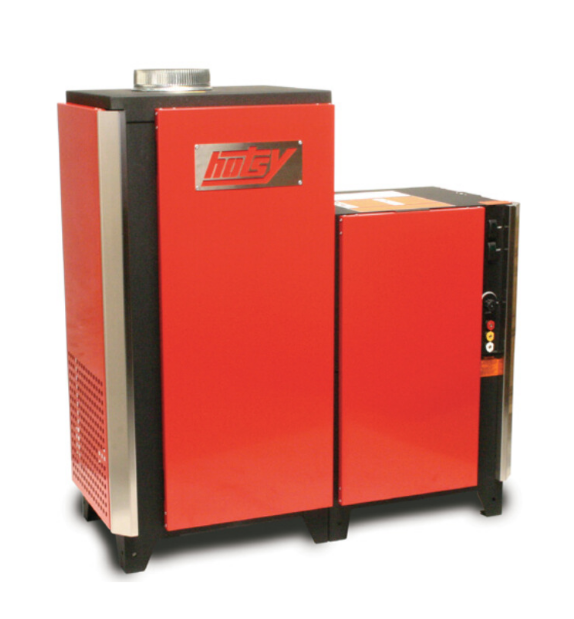
1475N
#1.109-953.0
5 GPM at 3,000 PSI
Hot water, high pressure, electric powered washer capable of operating on fresh water with appropriate safety controls. ETL/UL/CSA certified to UL1776 standard. Built in ISO-9001 registered factory. Perfect for wash bays with simple natural gas connection.
1473N
#1.109-713.0
5 GPM at 3,000 PSI
Hot water, high pressure, electric powered washer. ETL/UL/CSA certified to UL1776 safety standard. Built in ISO-9001 registered factory. Ideal for wash bays and facilities with natural gas hookups.
1452N
#1.109-703.0
4 GPM at 3,000 PSI
Hot water, high pressure, electric powered portable washer. ETL/UL/CGA/CSA certified conforming to UL standard 1776 for pressure washers. Built in ISO-9001 2008 registered factory.
943N
#1.109-696.0
4 GPM at 2,000 PSI
Hot water, high pressure, electric powered washer. ETL/UL/CGA/CSA certified to UL1776 safety standard. Built in ISO-9001 2008 registered factory. Great entry-level natural gas option.
Why Wash Bays Run Gas-Fired
Every hot water pressure washer has to burn something. On a portable machine that means carrying fuel oil or diesel — a tank to fill, fuel to store, and a delivery to remember. A gas-fired unit plumbs into the natural gas line already feeding the building, so the fuel arrives by pipe and the tank disappears from the job entirely.
For a bay that runs every day, that changes the economics. Natural gas is generally the cheaper fuel per unit of heat, and the labour of fuelling — someone walking out with a can, a delivery scheduled, a machine down because nobody filled it — goes away. Over a machine's service life that recurring cost usually outweighs the difference in purchase price.
The trade-off is mobility, and it is absolute: a gas-fired machine stays where it is installed. If you need to wash away from the building, you want an oil-fired unit or a diesel machine instead. Gas-fired is the right answer when the work comes to the machine, which is exactly the case in a fleet wash bay.
What installation involves
A gas-fired unit needs an adequate gas supply, venting and water at the wash point, so the practical question is usually what your building can already support rather than which model to pick. That is worth checking before you specify a machine — it is part of wash bay design, and something we assess on-site during a free consultation rather than guessing at from a catalogue.
Specify a Gas-Fired Unit For Your Bay
We'll look at your gas supply, venting and water before recommending a machine — so what you buy is what your building can actually run.