← Back to Blog
July 21, 2026 Enzos Cleaning LLC

5 Ways to Best Hot Water Pressure Washers For Construction

Choosing the best hot water pressure washers for construction depends on matching power, mobility, and heating method to the demands of the job site. In this guide, we outline five practical ways to evaluate and select equipment that delivers reliable cleaning performance while minimizing downtime and operating costs.

Key Takeaways

  • Identify the required PSI and GPM for your specific construction tasks.
  • Choose a power source (diesel, gasoline, natural gas, or electric) that fits site logistics.
  • Prioritize mobility options like skid‑mounted or trailer units for frequent relocation.
  • Consider maintenance plans and local support, such as Enzo’s CLEAN Accountability Plan in Sandusky, Ohio.

5 Ways to Choose the Best Hot Water Pressure Washers for Construction

  1. Way 1: Determine the Required Pressure and Flow Rate

    Start by assessing the cleaning challenges you face on typical construction sites. Heavy‑duty equipment, concrete forms, and steel structures often need higher pressure to remove‑caked‑on mud, and oil residues. Look for units that deliver at least 3,000 PSI and 4 GPM for general site cleaning; tougher jobs like paint stripping or graffiti removal may require 4,000 PSI or more. Matching the flow rate ensures you can rinse away debris quickly without prolonging the wash cycle. Enzo’s Cleaning Solutions in Sandusky, Ohio, helps contractors calculate the exact PSI/GPM combo based on the types of surfaces and contaminants they encounter most often. Their authorized Hotsy and Mi‑T‑M dealers can demonstrate models that hit those targets while maintaining fuel efficiency. Remember that excessive pressure can damage delicate substrates, so having an adjustable unloader or variable‑speed pump adds versatility. By nailing the pressure and flow specifications first, you avoid over‑specifying (and overspending) or under‑specifying (and wasting time). This foundational step sets the stage for evaluating power source, mobility, and features that align with your workflow.

  2. Way 2: Select the Appropriate Power Source and Heating Method

    Construction sites vary widely in access to electricity, fuel storage, and ventilation, making the power source a critical decision. Diesel‑driven hot water pressure washers offer high torque and long runtimes, ideal for remote locations where electrical hookups are unavailable. Gasoline units provide a balance of portability and power, while natural‑gas models excel when a permanent fuel line is available, reducing operating costs and emissions. Electric hot water washers are best suited for indoor or enclosed environments—such as parking garages or maintenance shops—where fumes must be minimized. Enzo’s Cleaning Solutions, located in Sandusky, Ohio, carries the full spectrum of Hotsy and Mi‑T‑M models across these fuel types, allowing you to match the heating method to your site’s infrastructure. For example, a diesel‑powered Hotsy 1200 Series delivers consistent 250 °F water for cutting through grease on heavy machinery, whereas an electric Mi‑T‑M unit can safely clean food‑grade surfaces in a warehouse. Consider also the heating mechanism: coil‑type burners heat water on demand, while boiler‑style systems provide steadier temperatures for prolonged use. Evaluating fuel availability, noise restrictions, and emission rules will guide you to the most practical and compliant power source for your construction operations.

  3. Way 3: Evaluate Mobility and Mounting Options

    Mobility directly impacts how quickly you can move the washer between different zones of a construction project. Portable units with sturdy wheels and handles work well for smaller crews that need to shift equipment daily across a site. For larger fleets or permanent installations, skid‑mounted or trailer‑based systems offer greater stability and higher capacity while still being relocatable when needed. Enzo’s Cleaning Solutions provides custom mobile pressure‑washing rig builds that can be tailored to your specific truck or trailer dimensions, integrating hose reels, toolboxes, and storage for detergents and accessories. Their Sandusky, Ohio, service team can also install stationary units in wash bays or maintenance shops, connecting them to natural‑gas lines or three‑phase power for continuous operation. When choosing mobility, think about the typical travel distance between cleaning points, the terrain (gravel, mud, paved), and whether you need to navigate tight spaces like under bridges or inside parking structures. A unit that is too bulky will increase labor time and fuel consumption, while an overly lightweight model may lack the durability for rugged conditions. Matching the mounting style to your workflow ensures the pressure washer stays productive rather than becoming a logistical bottleneck.

  4. Way 4: Review Essential Features and Accessories

    Beyond pressure, flow, and power, the right accessories can dramatically improve efficiency and safety on a construction site. Surface cleaners with dual‑or‑triple‑nozzle heads reduce cleaning time on large flat areas like concrete slabs or asphalt. Trigger guns with ergonomic grips and adjustable pressure settings let operators fine‑tune the spray for delicate surfaces versus stubborn grime. High‑quality hoses rated for the unit’s PSI and temperature prevent premature wear and leaks. Nozzles in various spray angles (0°, 15°, 25°, 40°) enable you to switch from a pinpoint jet for stripping paint to a wide fan for rinsing large areas. Enzo’s Cleaning Solutions stocks a full line of Hotsy and Mi‑T‑M accessories, including wet‑sandblasting kits, Scaltrol scale‑control filters, and tower brushes for wash‑bay applications. Their Sandusky, Ohio, location also offers on‑site consultations to recommend the best detergent pairings—such as their “Sizzle” brushless truck wash—for construction‑equipment cleaning. Don’t overlook safety features like low‑oil shutoff, thermal relief valves, and pressure‑release valves, which protect both the machine and the operator. By selecting a washer that supports the accessories you actually need, you create a versatile cleaning system that adapts to changing job requirements without costly retrofits.

  5. Way 5: Factor in Service, Parts, and Local Support

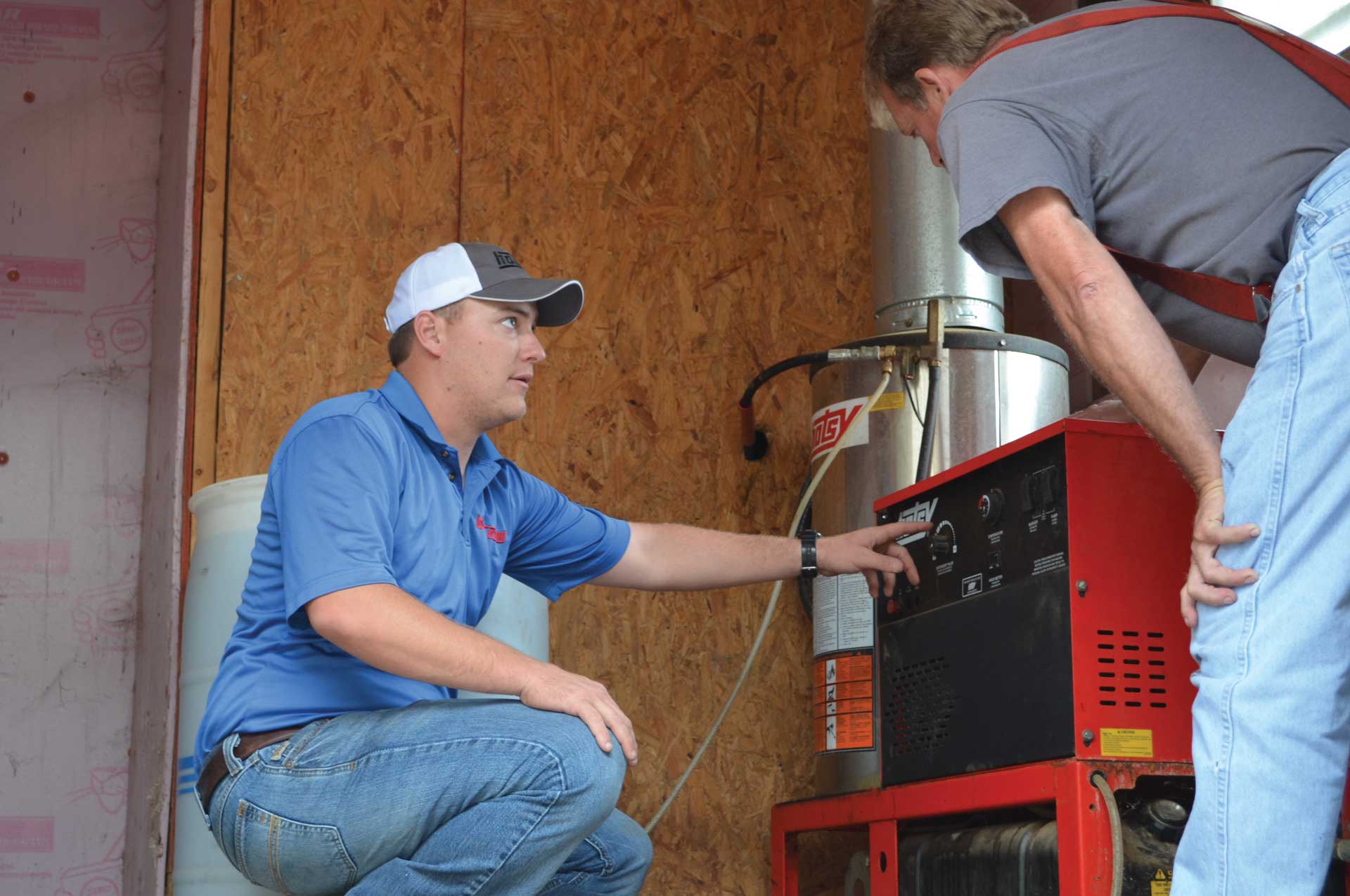
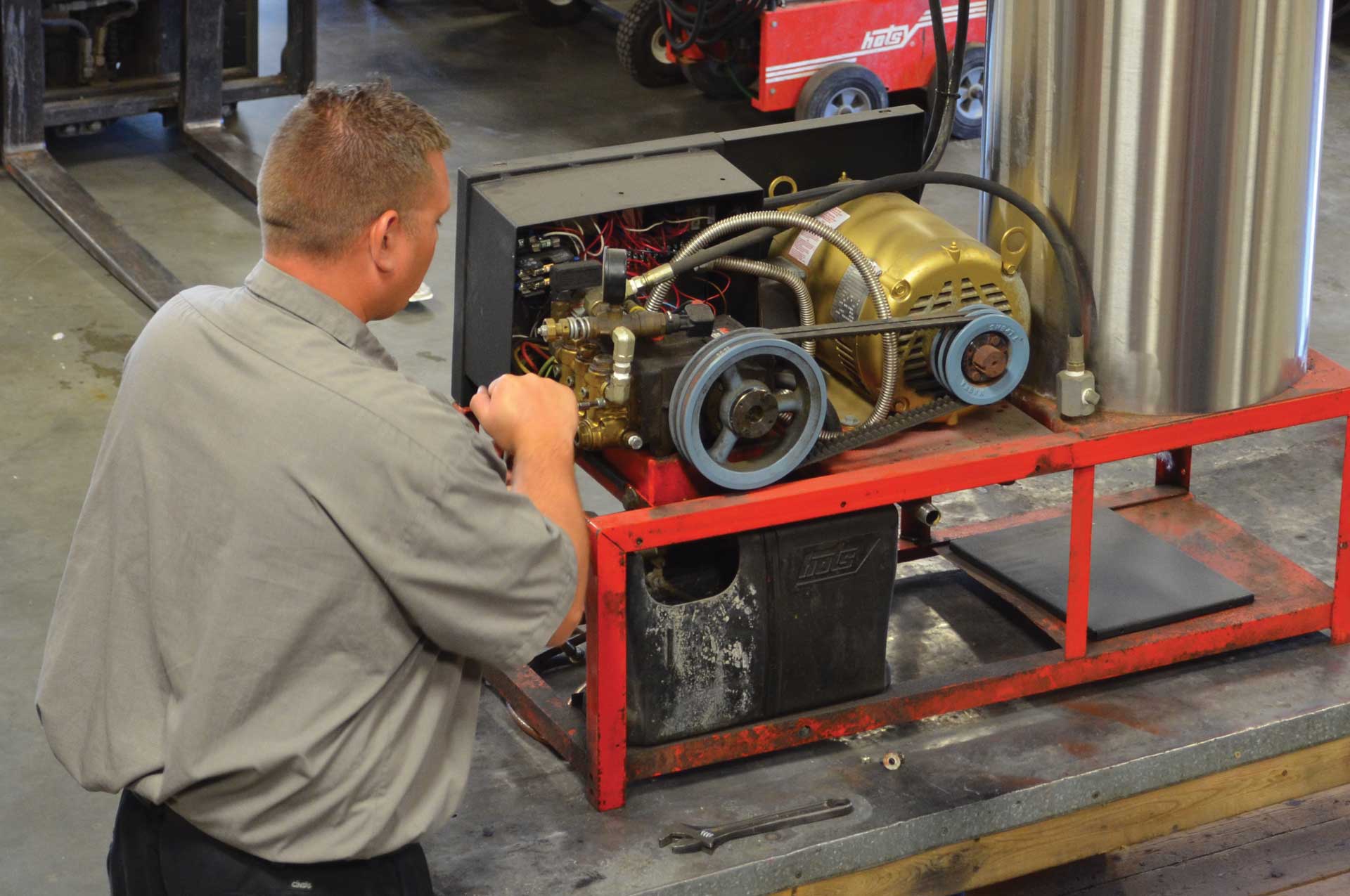
    Even the most robust hot water pressure washer will require routine maintenance and occasional repairs, especially in the demanding environment of a construction site. Choosing a dealer with a strong service network minimizes downtime and keeps your equipment running at peak performance. Enzo’s Cleaning Solutions, based in Sandusky, Ohio, offers factory‑trained technicians who service and repair all major brands, including Hotsy and Mi‑T‑M, either at your location or in their shop. Their CLEAN Accountability Plan provides scheduled preventive maintenance, customized maintenance schedules, operator training, and safety inspections—helping you avoid costly breakdowns before they happen. Because they stock pumps, hoses, reels, wands, trigger guns, nozzles, and surface cleaners, parts availability is rapid, reducing wait times for critical components. Additionally, Enzo’s offers free on‑site consultations to evaluate your cleaning needs and recommend the right equipment and detergents, with no obligation. Being located in Sandusky means they understand regional factors such as Ohio’s winter salt exposure, which can accelerate corrosion on equipment; they can advise on protective measures like undercarriage‑neutralizing systems. When you partner with a local provider that knows the challenges of construction sites in Ohio, Michigan, and surrounding states, you gain peace of mind that support is just a phone call away.

Frequently Asked Questions

What size hot water pressure washer do I need for a construction site?

The ideal size depends on the surfaces you clean and the typical contaminants. For general site cleanup—removing dirt, mud, and light oil from equipment and concrete—a unit delivering 3,000‑3,500 PSI at 4‑5 GPM is usually sufficient. Tougher tasks like stripping paint, cleaning heavy‑duty machinery, or preparing surfaces for sealing may require 4,000‑5,000 PSI with similar or higher flow rates. Enzo’s Cleaning Solutions in Sandusky, Ohio, can perform a free on‑site assessment to match the PSI/GPM to your specific workload, ensuring you don’t over‑invest in unnecessary power or end up with a unit that struggles to meet demands.

How often should I service my hot water pressure washer in Sandusky, Ohio?

Preventive maintenance intervals vary by usage, but a good rule of thumb is to perform a full service inspection every 250‑300 operating hours or at least quarterly for machines in regular service. This includes checking pump oil, inspecting belts and hoses, testing safety valves, and cleaning the heating coil. Enzo’s CLEAN Accountability Plan offers customized schedules based on your actual hours and conditions, helping you avoid unexpected failures. Their Sandusky, Ohio, technicians can also provide on‑site service to keep downtime to a minimum.

Can I use a hot water pressure washer for undercarriage cleaning?

Absolutely. Hot water significantly improves the effectiveness of detergents and helps break down grease, road salt, and grime on vehicle undercarriages. When paired with a specialized undercarriage sprayer—such as Enzo’s Neutralizer system—you can chemically neutralize corrosive salt deposits rather than just rinsing them away. This approach not only cleans more thoroughly but also helps prevent rust and extends vehicle life, a benefit highlighted for municipal fleets and snowplows operating in the Sandusky, Ohio, area.

Ready to find the perfect hot water pressure washer for your construction projects? Contact Enzo’s Cleaning Solutions today for a free, no‑obligation consultation and let their experts guide you to the right equipment, accessories, and maintenance plan. Visit Free Consultations to get started.

#commercial#listicle#Sandusky ohio