Wash Bay Design
Efficient, effective and SAFE wash bay solutions for your fleet. Let the experts at Enzo's help.
Designed for Performance & Safety
No two facilities are exactly alike. That's why we start with a consultation — evaluating your vehicles, workflow, labor, and building constraints — before we ever recommend equipment. Every wash bay we engineer focuses on three priorities: efficiency, effectiveness, and safety. We offer a full range of equipment, accessories and design services to create the perfect wash bay — including our own drive-over undercarriage wash system, to protect your investment.
Efficiency
Streamlined layouts and automated systems that clean faster with less labor and water waste.
Effectiveness
The right equipment combination to handle every vehicle type — from sedans to semis.
Safety
Non-slip surfaces, managed hose routing, festoon systems, and proper drainage to protect your team.
Explore the Complete System
Hover over each component to learn how Enzo's Automatic Drive-Through Wash System protects your fleet from salt corrosion and keeps vehicles spotless.
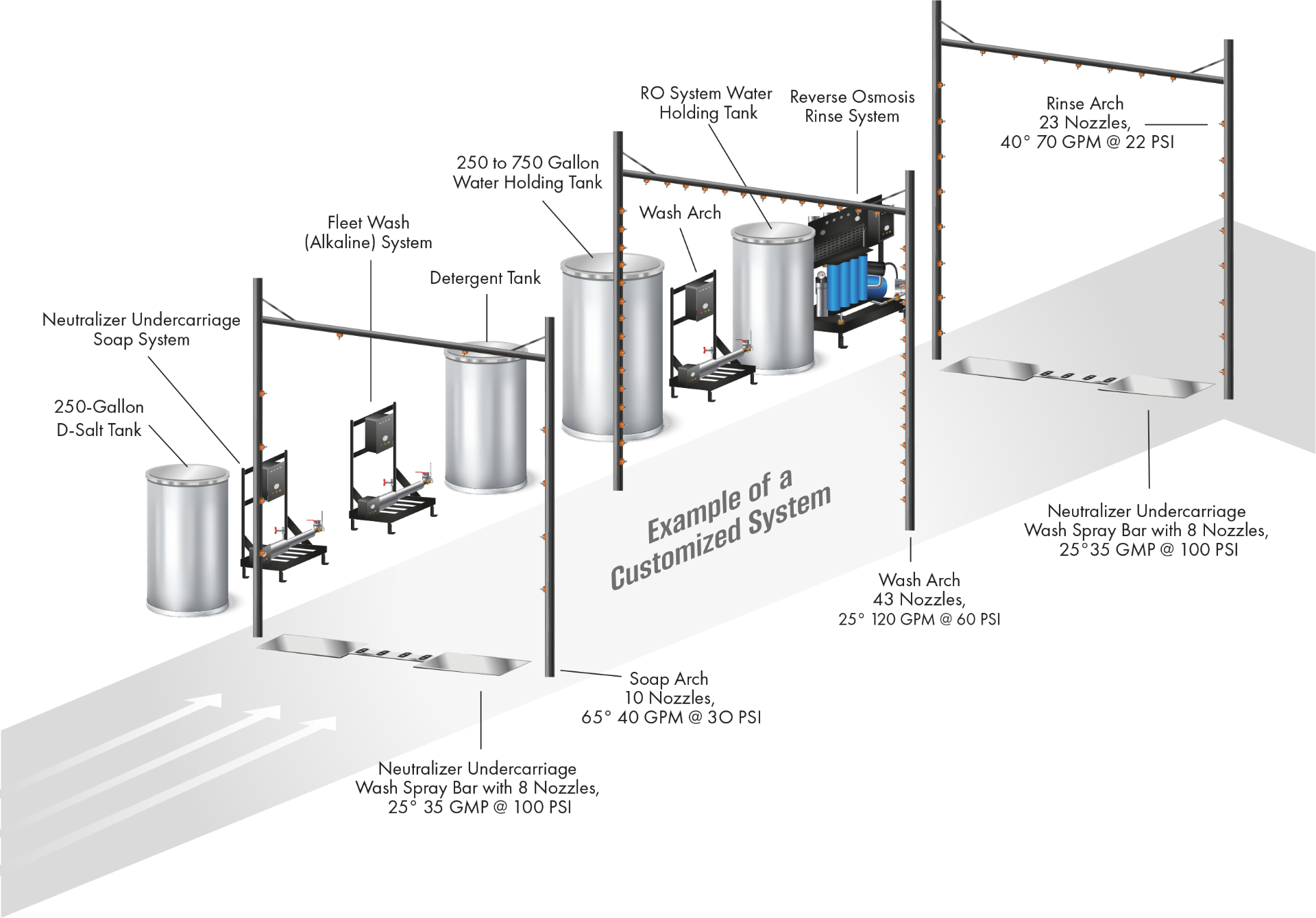
Hover or tap the blue dots to explore each system component
Wash Bay Equipment & Features
Every wash bay is engineered around your operation's workflow, then customized with the components your fleet needs. Here's what we work with:
Undercarriage Washer
Drive-over undercarriage cleaning to neutralize salt and prevent corrosion damage.
Enzo's original undercarriage wash system — stop corrosion before it starts.
Tower Brushes
Tall-vehicle cleaning systems for buses, trailers, and large fleet vehicles.
Reverse Osmosis System
Spot-free rinse and finish every time with advanced water purification.
Wireless Remotes
Operate your wash system from anywhere with convenient wireless controls.
Festoon Systems
Overhead hose management keeps hoses off the floor — safer, cleaner, more efficient operation.
High-Pressure Hoses
Industrial-grade hoses routed and managed for safety and maximum service life.
See Our Systems in Action
Watch how Enzo's undercarriage wash and salt neutralization systems protect your fleet from costly corrosion damage.
Salt Neutralizer Application
Our D-Salt neutralizing solution bonds to metal surfaces, stopping corrosion before it starts.
Custom Wash Bay Rinse System
Fully automated rinse cycles designed for your facility — maximize uptime and keep your fleet spotless.
Custom Wash Bay Solutions
Enzo's has helped design and install wash bay solutions for clients from Maine to Alabama — and everywhere in between. Our uniquely designed undercarriage cleaning systems help make maintaining your fleet easy and cost-effective.
See Our Wash Bay Solutions in Action
Fire Station Wash Bay
Keeping fire apparatus clean, protected, and ready for service year-round.
Municipal Fleet Wash
See how municipalities protect plow trucks and utility vehicles from salt corrosion.
Fully Customized to Meet Your Fleet's Cleaning Needs
Every wash bay system is built to your specifications with the features you need.
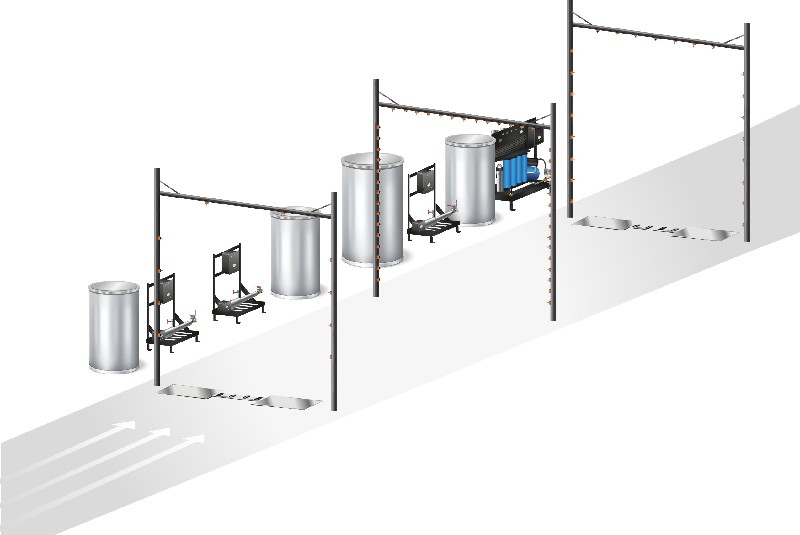
High Touch / Touchless Designs
Choose the wash configuration that matches your fleet's needs and sensitivity.
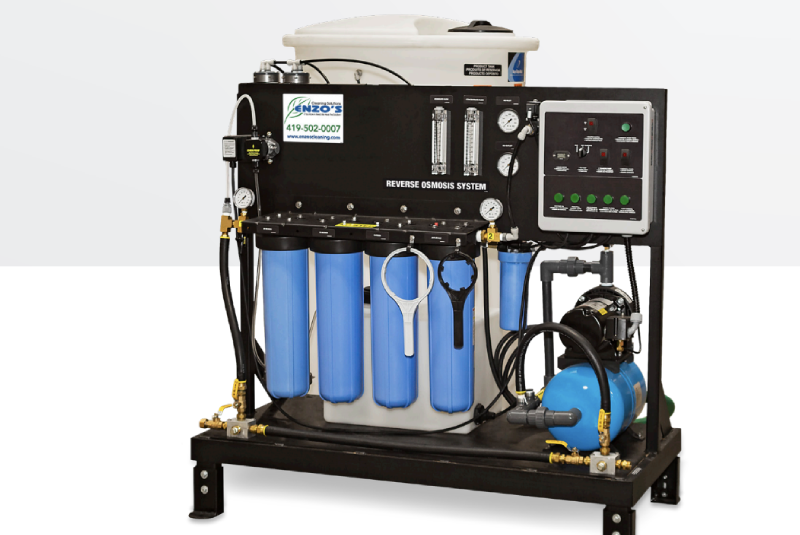
Reverse Osmosis System
Spot-free rinse and finish every time with advanced water purification.
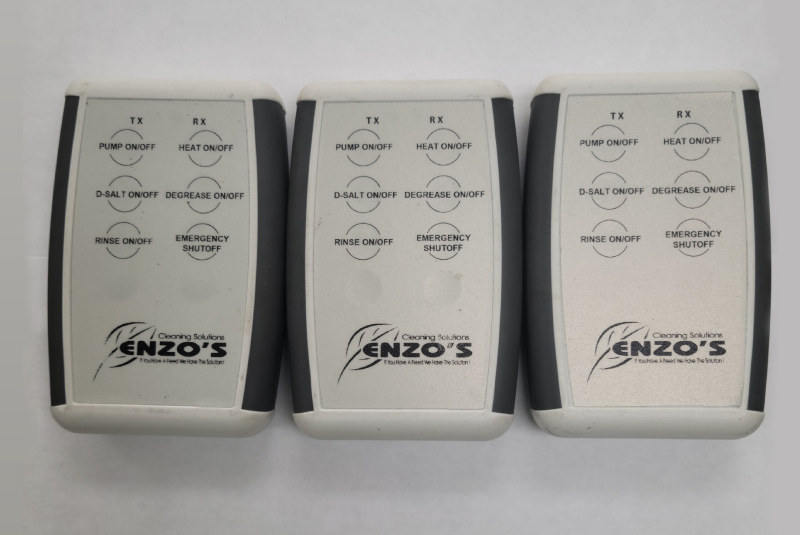
Wireless Remotes
Operate your wash system from any location with convenient wireless controls.
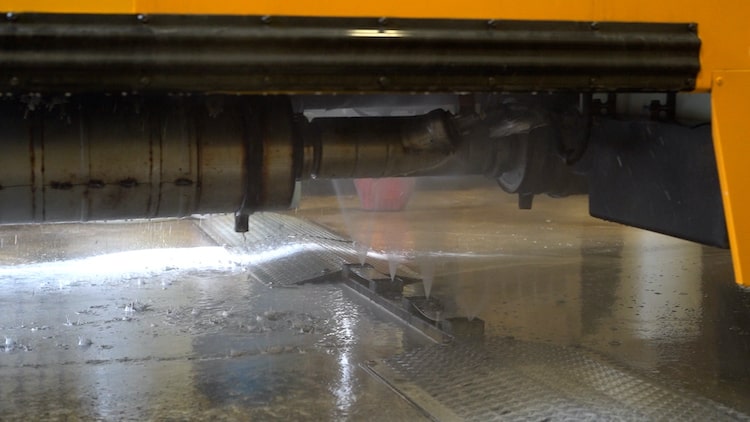
Undercarriage Wash Unit
Integrated undercarriage cleaning to fight salt and corrosion damage.
Featured Wash Bay Equipment
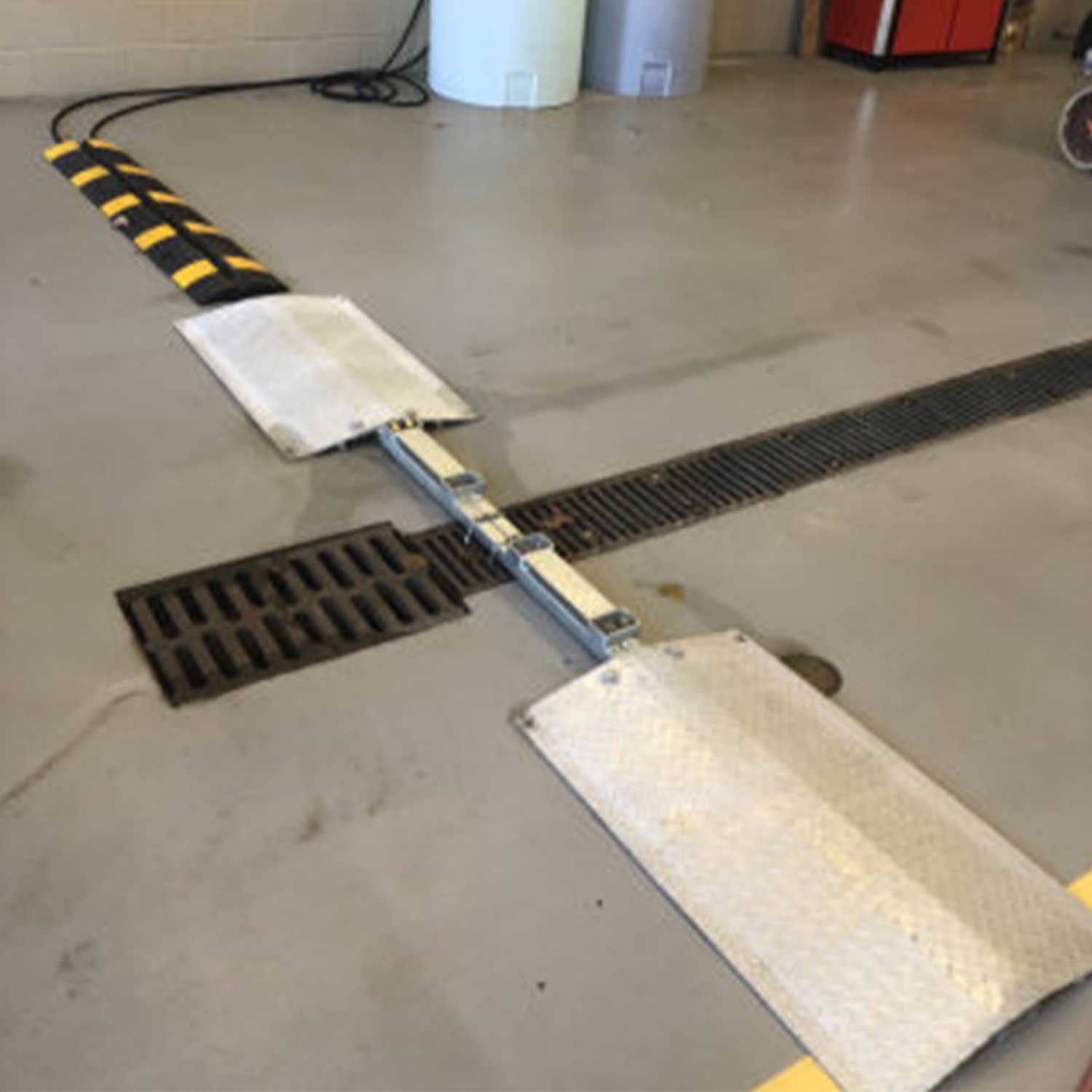
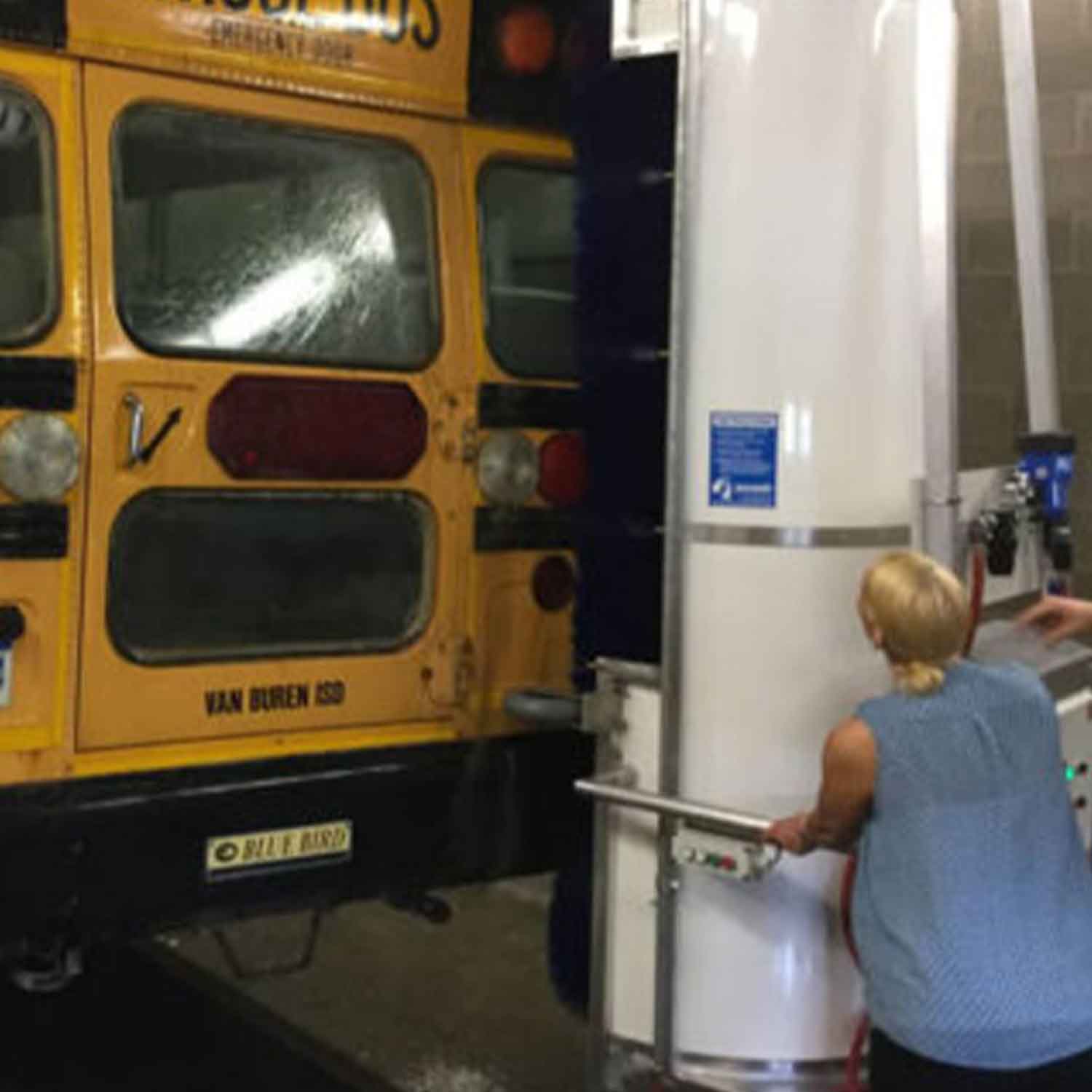
The Neutralizer — The Heart of Every Wash Bay
Every wash bay is better with The Neutralizer. Enzo's original undercarriage wash system chemically neutralizes salt and brine on contact — not just rinsing, but actually stopping corrosion before it starts.
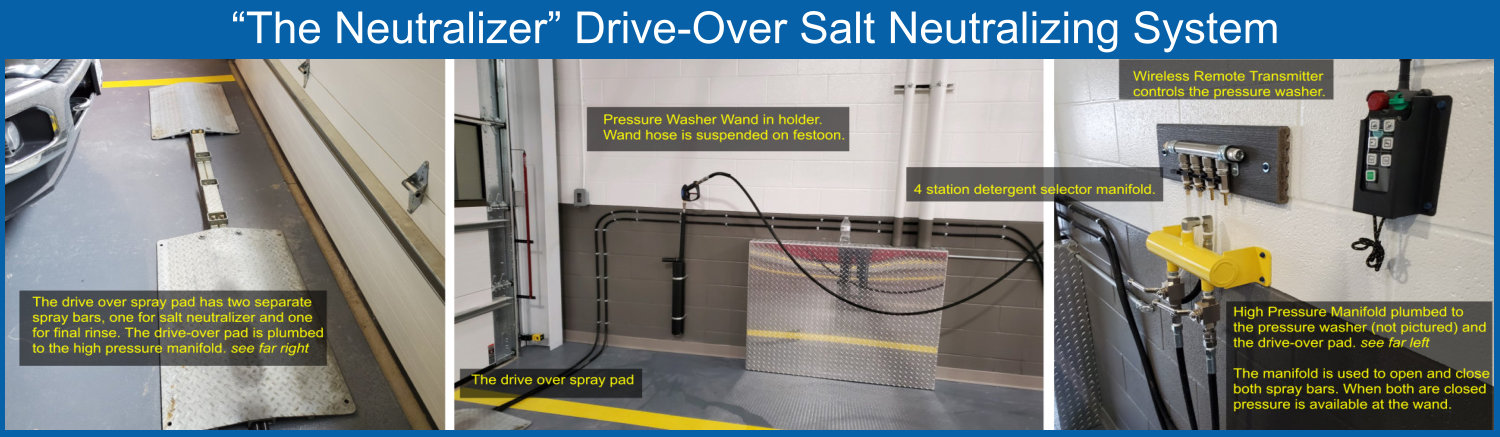
Explore The Neutralizer"The Neutralizer" Drive-Over Salt Neutralizing System
A closer look at how the drive-over spray pad, 4-station detergent manifold, and wireless remote integrate into a complete wash bay.
Value, Not Just Price
Why Buy From Enzo's?
A machine is where it starts — not where it ends. Compare the complete program against buying a box online.
| What You Get | Enzo's ProgramBest Value | Typical Online Seller |
|---|---|---|
| Facility Assessment | ||
| Machine Sizing | ||
| Operator Training | Sometimes | |
| Local Service | Limited | |
| Parts Support | Mail Order Only | |
| Preventive Maintenance Program | ||
| Financing Options | Sometimes | |
| ROI Analysis | ||
| Ongoing Customer Support |
Wash Water Treatment: Oil Water Separators & Water Reclaim
Washing a fleet produces water carrying oil, grease, sediment and de-icing chemicals, and where that water is allowed to go is decided by your local authority rather than by preference. Resolving it during design is far cheaper than retrofitting after an inspection says otherwise — it is the constraint most likely to change what a bay costs.
An oil water separator removes hydrocarbons and settles solids before discharge, and is commonly what a sanitary sewer connection requires. A water reclaim system goes further and recycles the wash water back through the bay, which cuts fresh-water draw and the volume being discharged at the same time. In a high-throughput bay the utility saving can make reclaim pay for itself; in a low-volume bay it usually will not, and we will say so.
Reverse osmosis sits alongside both and solves a different problem — spot-free rinsing on the final pass, which matters for finish rather than compliance.
Wash Bay Design Questions
How much space does a fleet wash bay need?
It is driven by your largest vehicle, not your average one. The bay has to let that unit enter, be washed on all sides and exit, which usually means clearance beyond the vehicle's own dimensions plus room for the operator and equipment. We measure the building before recommending anything, because the constraint is almost always the space you already have rather than the equipment you want.
Can a wash bay be retrofitted into an existing building?
Usually, yes — most of our installations are retrofits rather than new construction. What decides it is water supply, drainage, electrical service and ceiling height. Those four are what we assess on site, and they determine which systems are practical before any equipment is chosen.
What happens to the wash water?
That depends on your local requirements, which is why it is worth resolving early rather than after installation. Options range from discharge to sanitary sewer where permitted, through oil-water separation, to reclaim systems that recycle wash water and cut fresh-water draw. Reclaim also reduces utility cost, so it can pay for itself in a high-volume bay.
Do I need heated water in the bay?
If you are removing grease, oil or road film, heat does work that pressure cannot — those soils soften and release at temperature. If you are rinsing mud and loose debris, cold water and good flow are enough. For a fixed bay, gas-fired heat is usually the cheaper way to get hot water because the fuel arrives by pipe rather than in a tank.
What does a wash bay cost?
There is no useful list price, because a bay for six pickups and a bay for forty plow trucks share almost nothing. Cost follows the vehicle mix, throughput, what your building already supports and whether you need water treatment. We scope it during a free on-site assessment rather than quoting a number that turns out to be wrong.
Can undercarriage washing be added to an existing bay?
Yes, and it is one of the most common additions. A drive-over undercarriage system sits in the wash lane and runs off the pressure washer already in the bay, so it does not require excavation or a rebuilt facility.
What companies design custom truck wash bays?
Enzo's Cleaning Solutions does — custom wash bay design is one of our core services. Our team provides free consultations and designs the bay around your trucks: equipment selection, layout, water treatment, and installation, whether that's a single wash pad or a high-throughput fleet facility.
What is included in a custom truck wash bay design?
Everything from assessment to installation: we measure your building, specify the wash equipment for your vehicle mix, design the layout for throughput and safety, resolve water supply, drainage, and treatment (oil-water separation, reclaim, reverse osmosis), and install it. Undercarriage salt neutralization can be integrated into the lane from the start.
Request a Facility Assessment
Get a wash bay engineered around your facility and workflow. Contact Enzo's today for a professional consultation.